
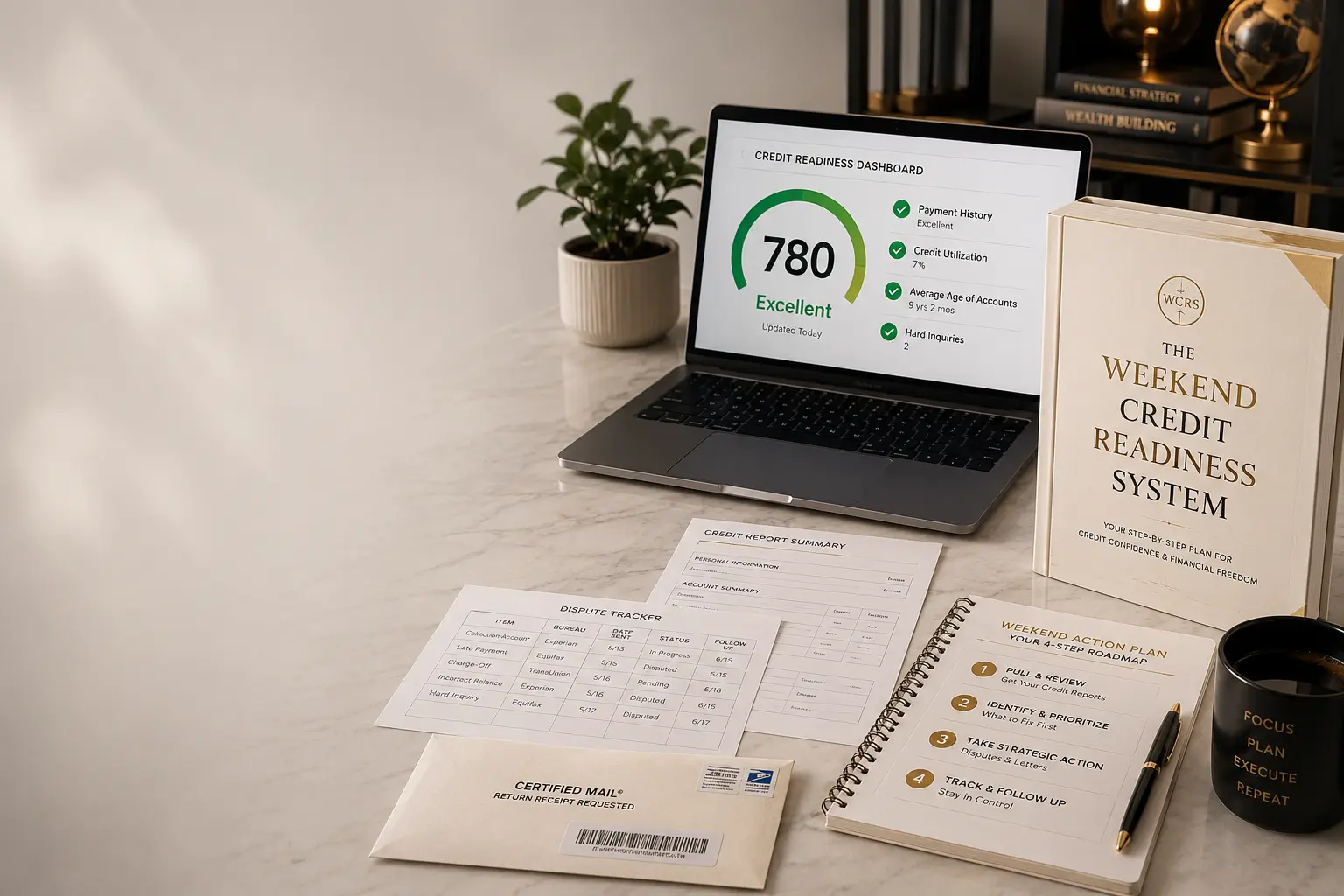
The Charge-Off Trap: Why an Internal Accounting Entry Is NOT a Free Pass to Ruin Your Credit Report

VEOL Asset 1: WebP · 1200×675 (16:9) · <100KB · File: charge-off-ledger-data-nodes.webp · Pinterest: "Why a Charge-Off Is NOT a Free Pass to Ruin Your Credit" · Board: Credit & Charge-Off Rights
Key Takeaway: A charge-off is an internal accounting entry by the original creditor — not a legal judgment, not a debt forgiveness, and not a free pass to report the same obligation multiple times. Under FCRA § 1681s-2 and Metro 2 reporting rules, furnishers must report accurate, complete information. When they don't, those inaccuracies create factual grounds for a dispute.
You opened your credit report and saw the word that makes every consumer's stomach drop:
CHARGE-OFF.
It sounds final. It sounds like a verdict. It sounds like the creditor gave up on you and now that black mark is permanently welded to your financial identity.
But here is what almost nobody explains clearly:
A charge-off is an internal accounting entry. It is the original creditor moving your account from "asset" to "loss" on their own books — typically after 180 days of non-payment. That is all it is.
It does not erase the debt. It does not mean a court ruled against you. And it absolutely does not give the creditor — or any debt buyer who later purchases the account — a free pass to report the same obligation inaccurately, duplicately, or past the legal reporting window.
The Fair Credit Reporting Act (FCRA) and the Metro 2 reporting standard set the rules for how charge-offs must be reported. When furnishers break those rules, the resulting inaccuracies are not "loopholes" or "tricks" — they are factual reporting errors you have a federal right to dispute.
Here are seven charge-off reporting traps — and how to factually challenge each one.
Trap 1: The Double-Balance Error After a Sale
When a creditor charges off an account and then sells it to a third-party debt buyer, the original creditor's trade line should generally report a $0 balance — because they no longer own the account. The debt buyer's trade line then reports the balance they purchased.
The trap appears when both trade lines report a positive balance for the same debt. This double-counting can inflate your perceived debt load and misrepresent your file to lenders.
How to factually challenge it:
- •Identify whether the original creditor's line still shows a balance after the account was sold.
- •Compare against any sale or transfer notice you received.
- •Dispute the original creditor's balance as inaccurate under FCRA § 1681s-2 if it should be zero.
Compliance Note: This is not a guarantee the balance will change or be removed. You are documenting a factual inconsistency — not disputing a debt simply because it is negative.
Trap 2: The $0 Balance Misreport on an Unsold Account
The reverse trap also exists. If the original creditor has not sold the account, but their trade line reports a $0 balance while still showing the account as a charge-off, the entry may be incomplete or misleading. A $0 balance on an active charge-off can confuse underwriters about whether the obligation still exists.
Under FCRA § 1681s-2, furnishers must report complete and accurate information. An incomplete charge-off status — missing the actual balance — may be a factual basis for a dispute if it misrepresents the account.
How to factually challenge it:
- •Confirm whether the account was sold or retained by the original creditor.
- •Compare the reported balance against your last statement.
- •Dispute as incomplete if the balance field contradicts the account status.
Trap 3: Re-Aged Date of First Delinquency (DOFD)
The Date of First Delinquency (DOFD) is the date you first missed a payment and never caught up. Under FCRA § 1681c, a charge-off generally cannot be reported after 7 years from the DOFD.
When a debt buyer purchases a charged-off account, some mistakenly reset the DOFD to the purchase date — a practice called re-aging. This can keep an old charge-off on your report years longer than legally permitted.
How to factually challenge it:
- •Pull prior credit reports showing the original DOFD.
- •Compare the reported delinquency date to your original account statements.
- •Dispute as outdated if the 7-year window has passed.
Trap 4: Duplicate Trade Lines for the Same Charge-Off
The same charged-off debt can appear multiple times under different furnisher names — the original creditor, a first debt buyer, a second debt buyer — each reporting a separate trade line. This duplicate reporting can make a single obligation look like two or three, unfairly dragging down your profile.
Metro 2 reporting rules require that the same debt not be reported in a way that double-counts the obligation. If multiple trade lines trace back to one original account number, the duplicates may be a factual accuracy issue.
How to factually challenge it:
- •Identify all entries tied to the same original account number.
- •Dispute the duplicates, keeping the most accurate single entry.
- •Provide prior reports showing the duplication.
Trap 5: Phantom Fees and Interest on a Charged-Off Balance
Some debt buyers report a charge-off balance inflated with fees and interest that exceed what your original agreement or state law permits. A balance that grew silently — with no itemized breakdown — may be inaccurate.
Under 15 U.S.C. § 1692g, you have the right to request validation of the debt, including the amount. If the collector cannot itemize the balance, you may have a factual basis to dispute the reported amount.
How to factually challenge it:
- •Request a line-item breakdown of principal, fees, and interest.
- •Compare fees against your original creditor agreement and state law.
- •Dispute unauthorized or unverifiable charges specifically.
Trap 6: The 1099-C Confusion
When a creditor forgives a charged-off debt of $600 or more, they may issue a Form 1099-C, which reports the forgiven amount as income to the IRS. The trap: if the debt was forgiven and reported as income, but a trade line still shows the same balance as an active obligation, that may be a factual inconsistency.
Forgiveness and active collection are generally mutually exclusive. A 1099-C does not guarantee removal, but it is documentation you can use to question whether the reported status is accurate.
How to factually challenge it:
- •Retain any 1099-C forms you received for the account.
- •Compare the forgiven amount against the reported balance.
- •Dispute the status as inconsistent if forgiveness and active balance conflict.
Trap 7: Disputes Dismissed as "Frivolous"
Credit reporting agencies are not required to investigate disputes they reasonably determine are frivolous or irrelevant — including disputes that fail to provide enough specific information about what is supposedly wrong.
This is why generic "dispute everything" templates fail. The stronger approach is specificity: identify the exact field (balance, DOFD, account status), explain why it appears inaccurate, and attach supporting documentation.
How to factually challenge it:
- •Cite the specific data field that appears wrong (balance, DOFD, account status).
- •Attach copies — not originals — of supporting documents.
- •Dispute with both the credit reporting agency and the furnisher.
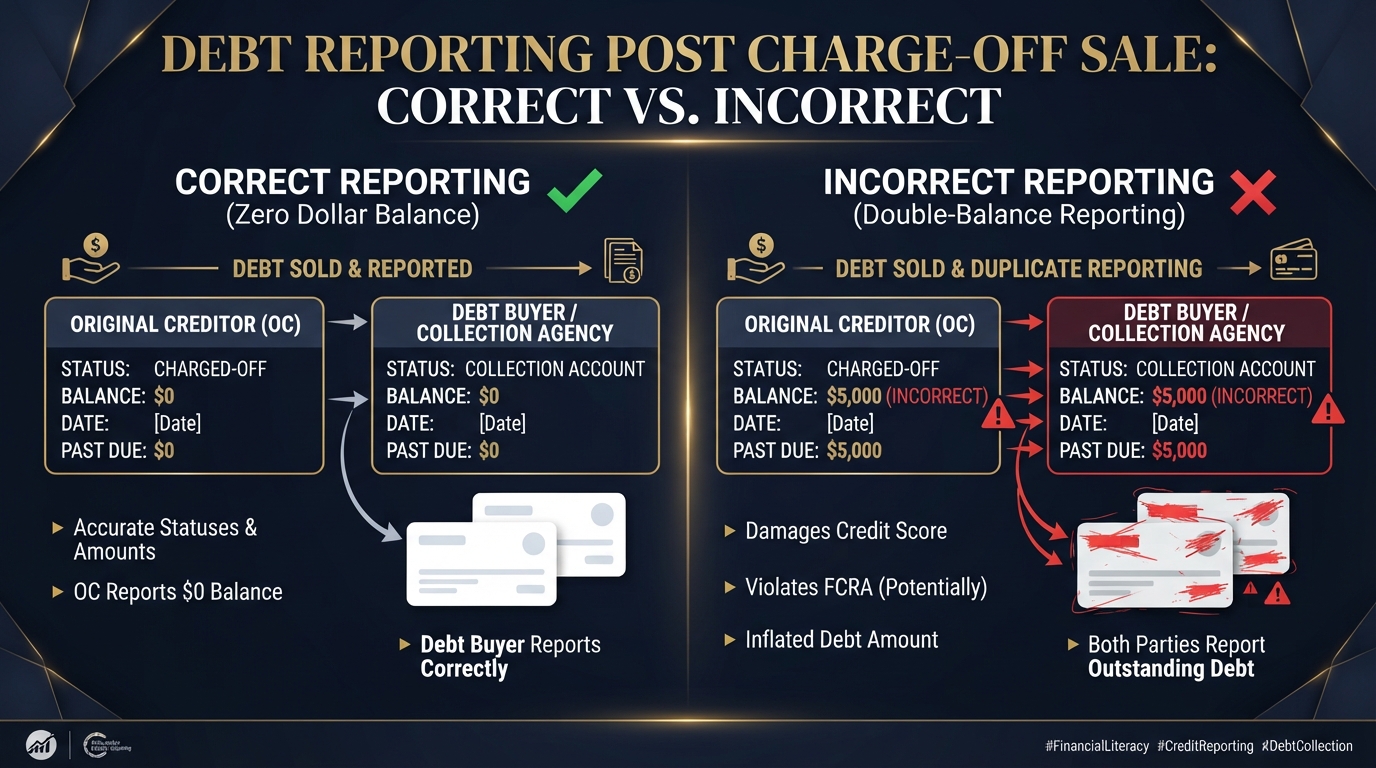
VEOL Asset 2: WebP · 1200×675 (16:9) · <100KB · File: charge-off-balance-reporting-comparison.webp · Pinterest: "The $0 Balance Rule After a Charge-Off Sale" · Board: Credit & Charge-Off Rights
Interactive Tool: Charge-Off Compliance Checker
Toggle the three parameters below to see a real-time reporting violation risk status. This educational tool helps you identify whether there may be factual grounds to dispute the accuracy of a charge-off trade line.
1. Has the charged-off account been sold to a third-party debt buyer?
2. Is the original creditor's trade line still showing a balance above $0?
3. Have you received a Form 1099-C for this account (debt forgiveness)?
Educational tool only. This assessment does not constitute legal advice, a guarantee of removal, or a prediction of any dispute outcome. Consumers can dispute inaccurate or incomplete credit-report information themselves for free under the FCRA.

VEOL Asset 3: WebP · 1200×675 (16:9) · <100KB · File: weekend-credit-readiness-system-charge-off.webp · Pinterest: "Organize Your Charge-Off Audit This Weekend" · Board: Credit & Charge-Off Rights
Organize Your Charge-Off Audit This Weekend
The Weekend Credit Readiness System gives you a 35-page educational blueprint, 21 documentation frameworks, and pre-engineered AI prompt scripts to help you review possible charge-off reporting inaccuracies and organize factual next steps.
$17
One-Time Payment
🔒 Instant Digital Access • One-Time $17 • No Subscriptions
Frequently Asked Questions
Does a charge-off mean I no longer owe the debt?+
No. A charge-off is an internal accounting action by the original creditor marking the account as a loss — typically after 180 days of non-payment. It does not erase the legal obligation, and it does not mean the debt is forgiven. The creditor may still collect, assign, or sell the account.
Can a sold charge-off still report a balance above zero?+
If the account has been sold to a third-party debt buyer, the original creditor's trade line should generally report a zero balance because they no longer own the account. A positive balance on the original creditor's line after a sale may be a reporting inaccuracy worth disputing under the FCRA.
What does FCRA § 1681s-2 require of furnishers?+
Section 1681s-2 requires furnishers of information to consumer reporting agencies to report accurate and complete information, to correct inaccuracies, and to investigate disputes forwarded by credit reporting agencies. It is the statutory foundation for challenging inaccurate charge-off reporting.
Do I have to pay someone to dispute a charge-off?+
No. The CFPB confirms that consumers can dispute credit-report inaccuracies themselves for free under the FCRA. You do not need to purchase any product or hire a company to exercise your dispute rights. Educational resources like The Weekend Credit Readiness System simply help you organize that process.
Can I guarantee a charge-off will be removed from my report?+
No legitimate resource can guarantee removal. If the information is accurate and within the reporting window, it generally cannot be removed simply because it is unfavorable. If it is inaccurate, incomplete, outdated, or unverifiable, you may have a factual basis to dispute it under the FCRA.
Editorial & Consumer Disclosure
This article is provided for general educational purposes and does not constitute legal, financial, or credit advice. Everything AI, LLC is an educational research publisher — not a Credit Repair Organization, law firm, or financial institution.
Consumers can review and dispute information they believe is inaccurate or incomplete themselves without purchasing any product. The FTC confirms that consumers can perform credit-report dispute activities at little or no cost.
No credit-score increase, account deletion, loan approval, or removal of accurate and verifiable information is promised or guaranteed. Individual results vary based on personal credit profile, reporting accuracy, and implementation.
Related Articles
Section 609 vs 611: Which Dispute Strategy to Use?
A clear breakdown of the difference between requesting validation under 609 and disputing accuracy under 611.
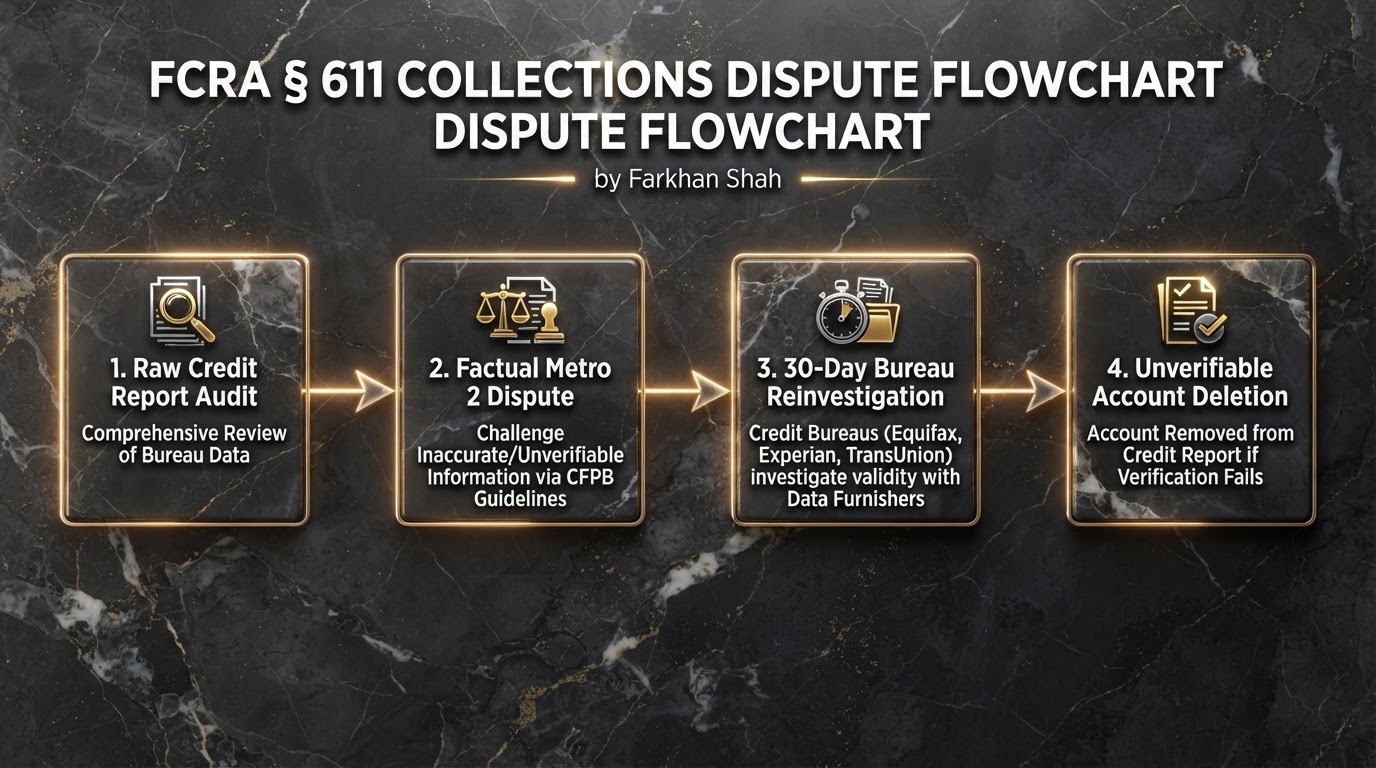
How to Remove Inaccurate Collections Using FCRA Section 611
Learn the exact legal framework to force credit bureaus to verify or delete inaccurate collection accounts from your credit report.

7 Hidden Audit Traps Collection Agencies Don't Want You to Know
Collection reporting isn't always accurate. Learn 7 factual audit traps — phantom balances, re-aged debts, missing chain of title — and how to challenge them under the FCRA and FDCPA.