
7 Hidden Audit Traps Collection Agencies Don't Want You to Know (And How to Factually Challenge Them)

VEOL Asset 1: WebP · 1200×675 (16:9) · <100KB · File: collection-audit-traps-hero.webp · Pinterest: "7 Hidden Audit Traps Collection Agencies Don't Want You to Know" · Board: Credit & Collection Rights
Key Takeaway: Collection accounts are not always reported accurately. Under the FCRA and FDCPA, you have the right to request verification and dispute information you reasonably believe is inaccurate, incomplete, or unverifiable — without paying anyone to do it for you.
You opened your credit report and saw a collection you don't recognize. Or maybe the balance looks wrong. Maybe the date seems off. Maybe the same debt appears twice under different names.
Before you panic — or worse, pay a stranger to "fix it" — you need to understand something:
Collection reporting is governed by federal law. And federal law gives you specific, factual rights to review, verify, and challenge information you believe is inaccurate.
The Fair Credit Reporting Act (FCRA) and the Fair Debt Collection Practices Act (FDCPA) set the rules. When collectors, furnishers, or credit reporting agencies fail to follow them, those failures can create factual grounds for a dispute — not because the debt "hurts your score," but because the information itself may be wrong.
Here are seven audit traps that show up on consumer credit reports — and how to factually challenge each one.
Trap 1: Phantom Balances That Don't Match the Original Debt
One of the most common reporting issues is a collection balance that doesn't match what you actually owed. When a debt is sold between collectors, balances can get inflated with fees, interest, or accounting errors that may not be legally permissible under your original agreement or state law.
Under 15 U.S.C. § 1692g, you have the right to request validation of a debt within 30 days of receiving a collection notice. If the collector cannot verify the amount, they generally must cease collection activity.
How to factually challenge it:
- •Compare the reported balance against your original account statements.
- •Request an itemized breakdown of principal, fees, and interest.
- •Dispute the specific discrepancy if the numbers don't match.
Compliance Note: This is not a guarantee the balance will change or be removed. You are documenting a factual inconsistency — not disputing a debt simply because it is negative.
Trap 2: Re-Aged Date of First Delinquency (DOFD)
The Date of First Delinquency (DOFD) is the date you first missed a payment and never caught up. Under FCRA § 1681c, most negative items — including collections — generally cannot be reported after 7 years from the DOFD.
Some collectors reset the DOFD when they purchase an account, making an old debt appear newer than it is. This is called re-aging, and it can keep a debt on your report years longer than permitted.
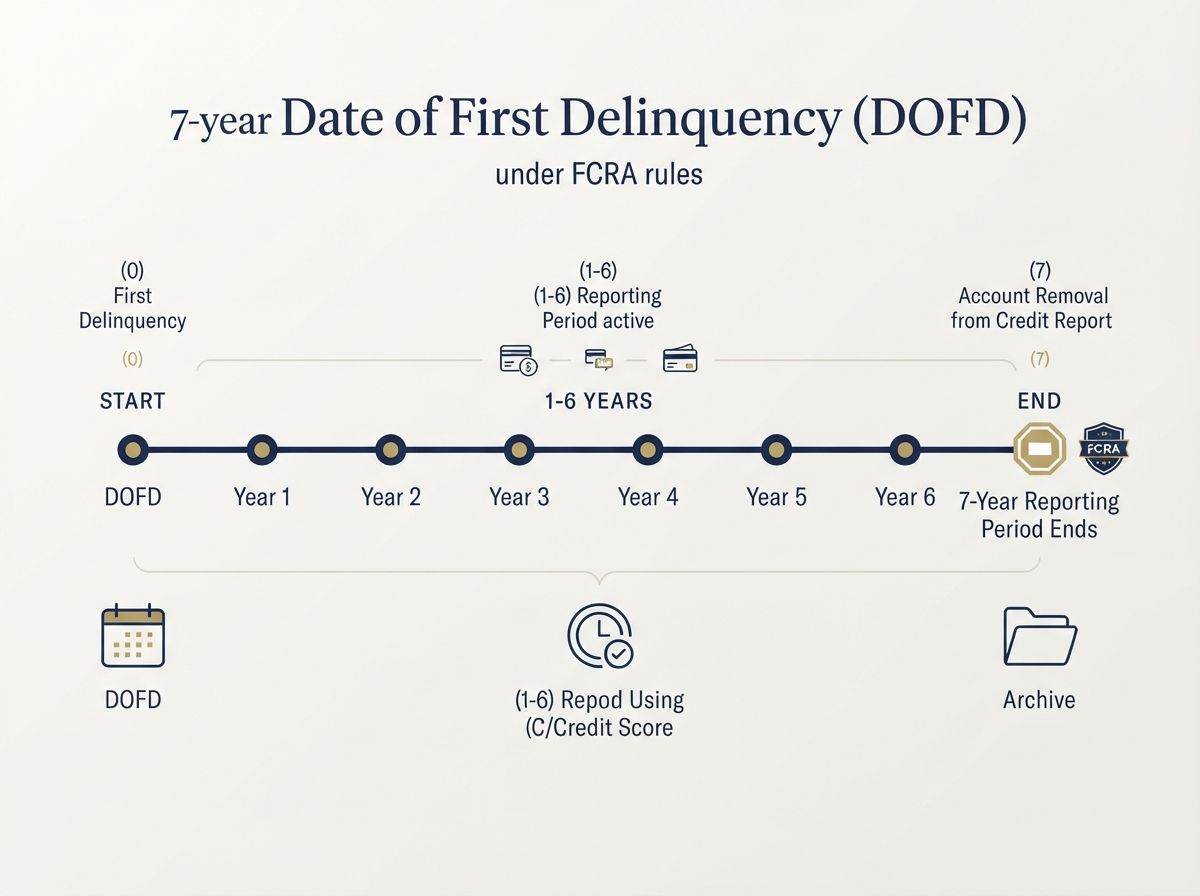
VEOL Asset 2: WebP · 1200×900 (4:3) · <100KB · File: 7-year-dofd-timeline-fcra.webp · Pinterest: "The 7-Year DOFD Timeline Explained" · Board: Credit & Collection Rights
How to factually challenge it:
- •Pull prior credit reports showing the original DOFD.
- •Compare the reported delinquency date to your original account statements.
- •Dispute as outdated if the 7-year window has passed.
Trap 3: Missing Chain of Title Documentation
When a debt is sold from one collector to another, the current collector must be able to demonstrate they own the account. If they cannot produce a bill of sale or assignment document, their authority to collect — and report — may be questionable.
Under 15 U.S.C. § 1692g, you can request debt validation, which includes the name of the original creditor and the amount owed. If the collector cannot provide this, you may have a factual basis to dispute the reporting.
How to factually challenge it:
- •Request a full itemized bill of sale showing ownership transfer.
- •Document any failure to provide chain of title.
- •Dispute the account as unverifiable if documentation is absent.
Trap 4: Duplicate Reporting of the Same Debt
The same debt can appear multiple times on your report under different collector names — especially when accounts are bought and sold. This can make your file look worse than it actually is, since a single obligation is being counted two, three, or more times.
Duplicate reporting is a factual accuracy issue. If the same original account appears under multiple collection entries, you may be able to dispute the duplicates as inaccurate or incomplete.
How to factually challenge it:
- •Identify all entries tied to the same original account number.
- •Dispute the duplicates, keeping the most accurate entry.
- •Provide prior reports showing the duplication.
Trap 5: No Itemized Breakdown of Fees and Interest
Collectors sometimes report a total balance without breaking down the principal, fees, and interest. If the fees exceed what your original agreement or state law permits, the reported balance may be inaccurate.
You have the right to request an itemized accounting. If the collector cannot provide one, or if the breakdown reveals unauthorized charges, you may have a factual basis to dispute the reported amount.
How to factually challenge it:
- •Request a line-item breakdown of the total balance.
- •Compare fees against your original creditor agreement.
- •Dispute unauthorized or unverifiable charges specifically.
Trap 6: Zombie Debts Past the Reporting Window
A "zombie debt" is an old, often time-barred obligation that resurfaces on your credit report — sometimes after the 7-year reporting window under FCRA § 1681c has expired. Collectors may attempt to re-report these debts by resetting dates or reassigning account numbers.
If a debt is being reported past the 7-year mark from the original DOFD, you may have a clear, factual basis to dispute it as outdated — regardless of whether the underlying obligation still exists.
How to factually challenge it:
- •Calculate the DOFD using original account records.
- •Dispute as obsolete if more than 7 years have passed.
- •Keep prior credit reports as evidence of the original date.
Trap 7: Disputes Dismissed as "Frivolous"
Credit reporting agencies are not required to investigate disputes they reasonably determine are frivolous or irrelevant — including disputes that fail to provide enough specific information about what is supposedly wrong.
This is why generic "dispute everything" templates fail. The stronger approach is specificity: identify the exact field, explain why it appears inaccurate, and attach supporting documentation.
How to factually challenge it:
- •Cite the specific data field that appears wrong (balance, DOFD, account status).
- •Attach copies — not originals — of supporting documents.
- •Dispute with both the credit reporting agency and the furnisher.
Interactive Tool: Collection Audit Readiness Assessment
Answer three questions about the collection on your report. This educational tool helps you identify whether there may be factual grounds to request verification or dispute accuracy.
1. Have you received a full itemized bill of sale or chain of title from the current collector?
2. Is the Date of First Delinquency more than 7 years old?
3. Is the reported balance higher than the original account amount?
Educational tool only. This assessment does not constitute legal advice, a guarantee of removal, or a prediction of any dispute outcome. Consumers can dispute inaccurate or incomplete credit-report information themselves for free under the FCRA.

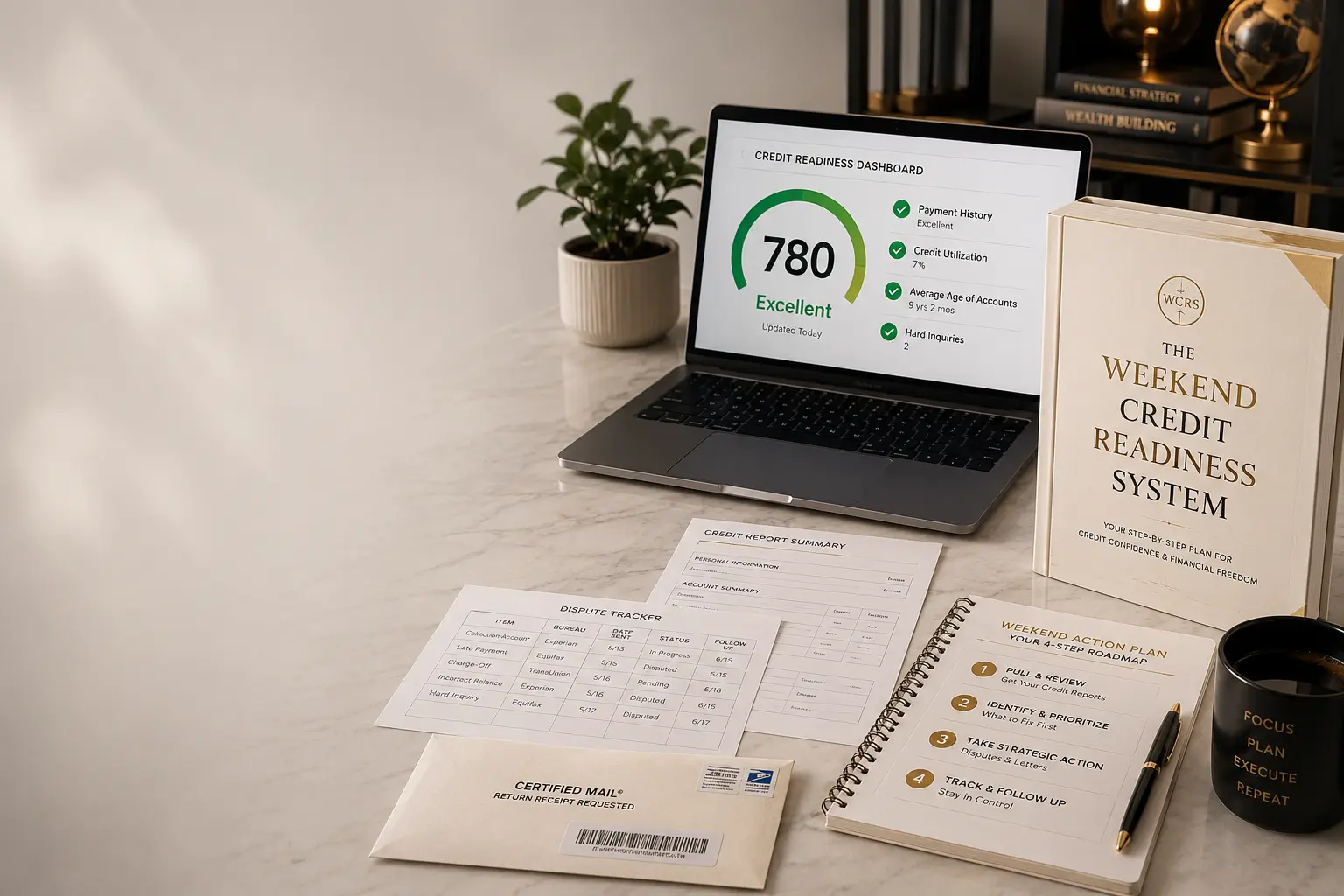
VEOL Asset 3: WebP · 1200×675 (16:9) · <100KB · File: weekend-credit-readiness-system-cta.webp · Pinterest: "Organize Your Collection Audit This Weekend" · Board: Credit & Collection Rights
Organize Your Collection Audit This Weekend
The Weekend Credit Readiness System gives you a 35-page educational blueprint, 21 documentation frameworks, and pre-engineered AI prompt scripts to help you review possible reporting inaccuracies and organize factual next steps.
$17
One-Time Payment
🔒 Instant Digital Access • One-Time $17 • No Subscriptions
Frequently Asked Questions
Can a collection agency report a debt that is older than 7 years?+
Under FCRA § 1681c, most negative items — including collections — generally cannot be reported after 7 years from the Date of First Delinquency (DOFD). If a collection is being reported past that window, you may have a factual basis to dispute it as outdated. However, the 7-year clock is measured from the original delinquency, not from when the collector purchased the account.
What is debt validation under 15 U.S.C. § 1692g?+
Section 1692g of the FDCPA gives a consumer 30 days after receiving an initial collection notice to request validation of the debt. If the collector cannot provide verification, they generally must cease collection activity. This is a consumer-protection right — not a guaranteed deletion of accurate debt from your credit report.
Do I have to pay someone to dispute inaccurate collection reporting?+
No. The CFPB confirms that consumers can dispute credit-report inaccuracies themselves for free under the FCRA. You do not need to purchase any product or hire a company to exercise your dispute rights. Educational resources like The Weekend Credit Readiness System simply help you organize that process.
What happens if a collection agency re-ages an old debt?+
Re-aging — resetting the DOFD to make an old debt appear newer — is a reporting issue you may be able to dispute if you have documentation showing the original delinquency date. Keep records of original account statements and any prior credit reports to support a factual dispute.
Can I guarantee a collection will be removed from my report?+
No legitimate resource can guarantee removal. If the information is accurate and within the reporting window, it generally cannot be removed simply because it is unfavorable. If it is inaccurate, incomplete, outdated, or unverifiable, you may have a factual basis to dispute it under the FCRA.
Editorial & Consumer Disclosure
This article is provided for general educational purposes and does not constitute legal, financial, or credit advice. Everything AI, LLC is an educational research publisher — not a Credit Repair Organization, law firm, or financial institution.
Consumers can review and dispute information they believe is inaccurate or incomplete themselves without purchasing any product. The FTC confirms that consumers can perform credit-report dispute activities at little or no cost.
No credit-score increase, account deletion, loan approval, or removal of accurate and verifiable information is promised or guaranteed. Individual results vary based on personal credit profile, reporting accuracy, and implementation.
Related Articles
Section 609 vs 611: Which Dispute Strategy to Use?
A clear breakdown of the difference between requesting validation under 609 and disputing accuracy under 611.
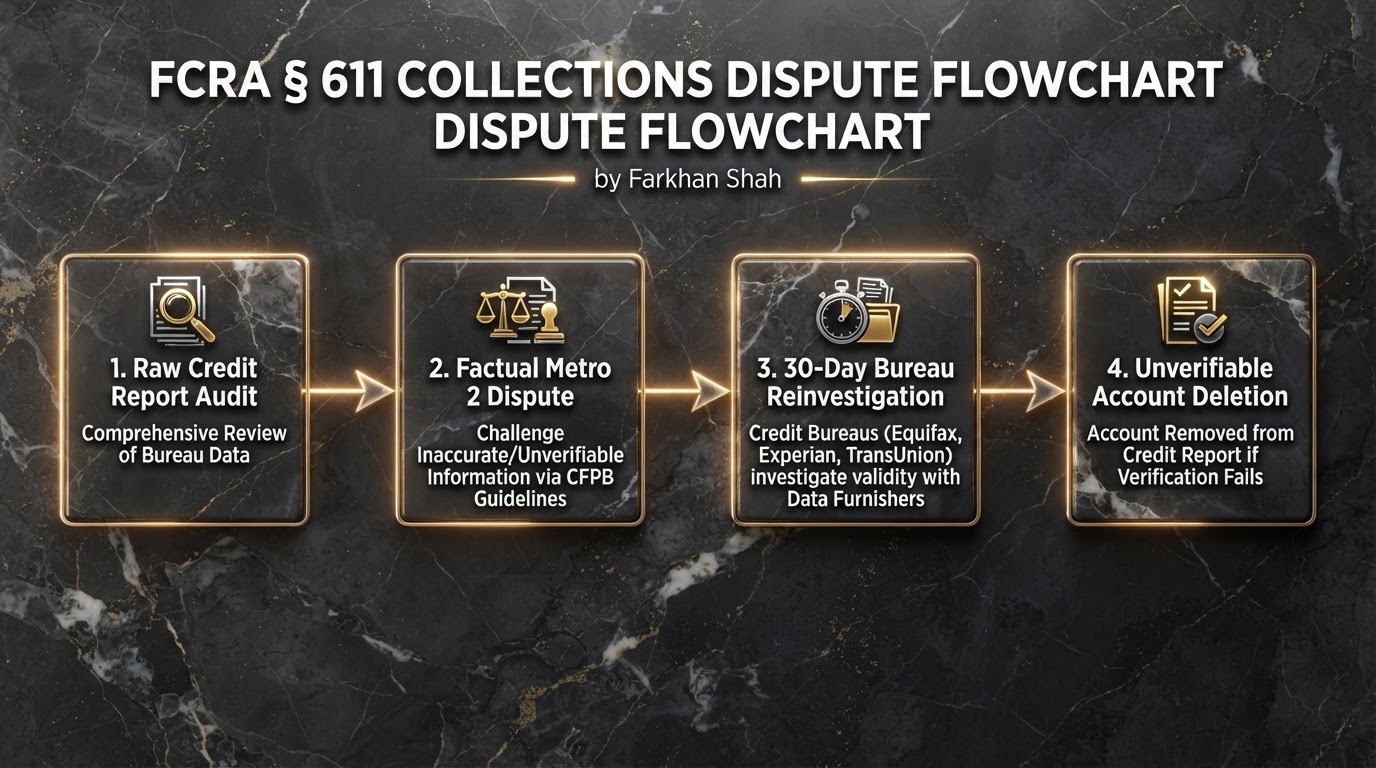
How to Remove Inaccurate Collections Using FCRA Section 611
Learn the exact legal framework to force credit bureaus to verify or delete inaccurate collection accounts from your credit report.

The Charge-Off Trap: Why an Internal Accounting Entry Is NOT a Free Pass
A charge-off is an internal accounting entry — not a free pass to ruin your credit. Learn 7 charge-off reporting traps and how to factually challenge them under FCRA § 1681s-2 and Metro 2 rules.