

5 Statutory Rules Credit Bureaus Ignore When Reporting Late Payments (And How to Audit Your Data)

VEOL Asset 1: WebP · 1200×675 (16:9) · <100KB · File: late-payment-reporting-rules-hero.webp · Pinterest: "5 Rules Bureaus Ignore When Reporting Late Payments" · Board: Credit & FCRA Rights
Key Takeaway: Credit bureaus and furnishers must follow specific statutory rules when reporting late payments — including the 30-day reporting threshold, maximum-possible accuracy under FCRA § 1681e(b), and Metro 2 payment rating codes. When they don't, those failures create factual grounds for an accuracy dispute.
You saw a 30-day late payment on your credit report. You remember paying on time — or maybe a day or two late, but certainly not 30 days. Yet there it is, dragging down your score and sitting on your file like a permanent stain.
Here's what most consumers don't realize:
Late payment reporting is not arbitrary. It is governed by specific statutory rules under the Fair Credit Reporting Act and the Metro 2 reporting standard — and when bureaus ignore those rules, the resulting report may be factually inaccurate.
Under FCRA § 1681e(b), consumer reporting agencies must follow "reasonable procedures to assure maximum possible accuracy" of the information they report. The Metro 2 format — the industry standard for furnishing credit data — defines exactly how and when a late payment should be reported.
When a bureau or furnisher violates these rules, the late payment on your report may not just be "unfavorable." It may be factually wrong — and that distinction is what gives you a legitimate basis to dispute it under the FCRA.
Here are five statutory rules credit bureaus frequently ignore when reporting late payments — and how to audit your data to identify whether one of them applies to you.
Rule 1: The 30-Day Reporting Threshold
Under standard Metro 2 reporting guidelines, a payment generally must be at least 30 days past due before it is reported as a 30-day delinquency to the credit bureaus. A payment that is 15 or even 29 days late may trigger a creditor late fee, but it typically should not appear as a 30-day late mark on your credit report.
This distinction matters enormously. A 15-day late payment and a 30-day late payment are not the same event in the eyes of the reporting system — even though they may feel identical to you.
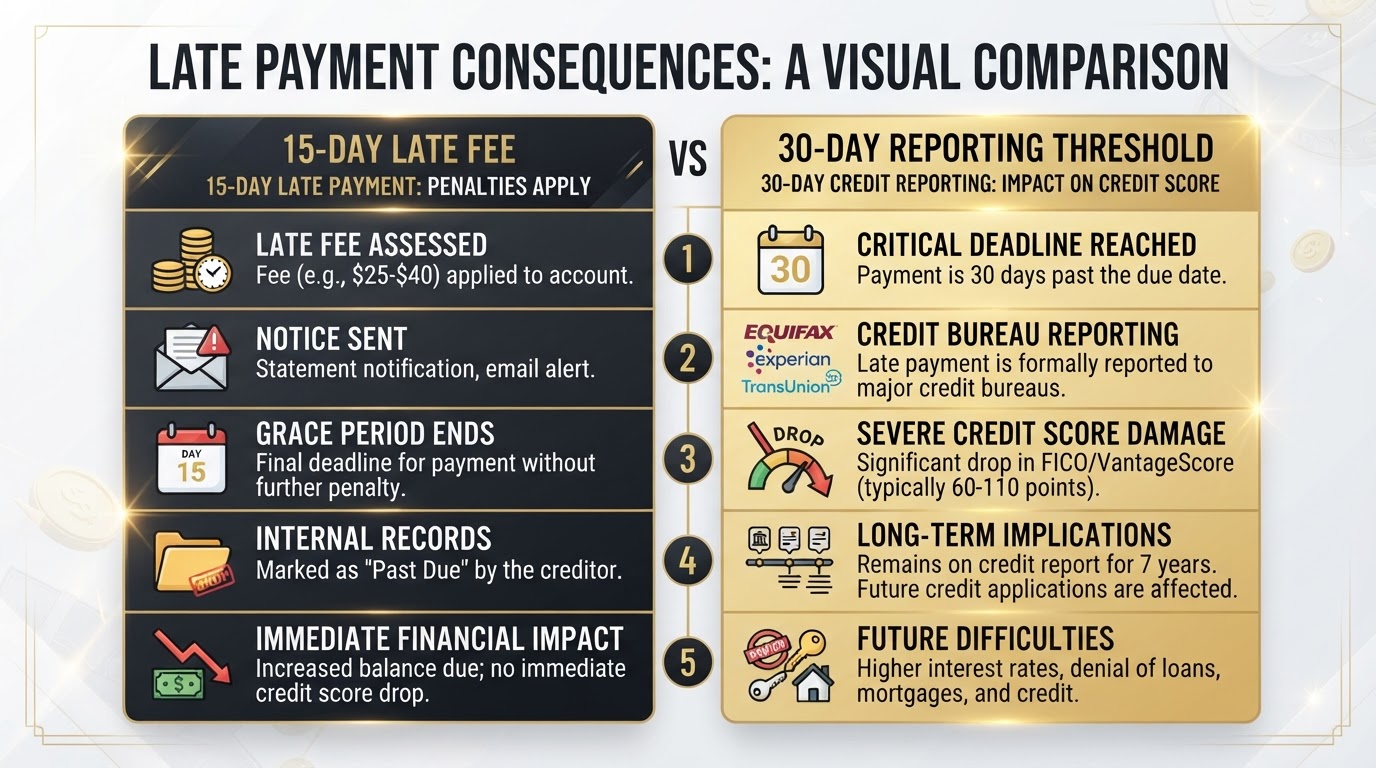
VEOL Asset 2: WebP · 1200×675 (16:9) · <100KB · File: 15-day-vs-30-day-reporting-threshold.webp · Pinterest: "The 30-Day Late Payment Rule Explained" · Board: Credit & FCRA Rights
⚡ Score Recovery Potential:
A late payment reported before the 30-day threshold may be factually inaccurate. If you can document that your payment was received before the 30-day mark, you may have a strong basis to dispute the reporting — which, if corrected, could remove a negative mark from your file.
How to audit it:
- •Identify the exact due date and the exact payment date from your bank records.
- •Calculate the precise number of days past due.
- •If fewer than 30 days, dispute the 30-day late mark as factually inaccurate.
Compliance Note: This is not a guarantee the late mark will be removed. You are documenting a factual discrepancy — not disputing a negative item simply because it hurts your score.
Rule 2: Maximum Possible Accuracy Under FCRA § 1681e(b)
FCRA § 1681e(b) requires consumer reporting agencies to "follow reasonable procedures to assure maximum possible accuracy of the information" they report. This is not a suggestion — it is a statutory requirement.
When a credit bureau reports a late payment that contradicts the furnisher's own records, or that was never verified before being placed on your file, the bureau may not be following those "reasonable procedures." That failure is a factual issue — not an opinion about whether the late payment is "fair."
⚡ Score Recovery Potential:
If a bureau cannot demonstrate it followed reasonable procedures to verify the late payment before reporting it, you may have grounds to dispute the accuracy of the entry under § 1681e(b) — potentially leading to correction or removal of the inaccurate mark.
How to audit it:
- •Request the furnisher's records of the specific payment in question.
- •Compare the furnisher's data against the bureau's report.
- •If they contradict each other, dispute the bureau entry citing § 1681e(b).
Rule 3: Consistent Date of First Delinquency Across Bureaus
The Date of First Delinquency (DOFD) is the anchor date for the entire 7-year reporting window under FCRA § 1681c. If Experian reports a DOFD of March 2023, but Equifax reports June 2023 for the same account, one of them is factually wrong.
Contradictory DOFDs across bureaus are a factual inconsistency — not a matter of opinion. The same account cannot have two different first delinquency dates. This type of contradiction is one of the most auditable late-payment reporting errors.
⚡ Score Recovery Potential:
If one bureau's DOFD is wrong, the late payment may be reporting outside the correct 7-year window on that bureau's file — or it may have been reported earlier than it should have been. Either way, correcting the DOFD could change or remove the negative entry.
How to audit it:
- •Pull all three bureau reports (Equifax, Experian, TransUnion).
- •Compare the DOFD for the same account across all three.
- •Dispute the incorrect DOFD with the specific bureau showing the wrong date.
Rule 4: Metro 2 Payment Rating Codes Must Be Accurate
The Metro 2 format requires furnishers to report two key fields for every account: the Account Status (open, closed, current, delinquent) and the Payment Rating (0 = current, 1 = 30 days late, 2 = 60 days late, and so on).
A payment that is current should be reported with a payment rating of 0. A payment that is 30 days late should be reported with a rating of 1. If a furnisher reports a payment rating of 1 when the payment was actually made on time — or within the grace period — the Metro 2 code is factually incorrect.
⚡ Score Recovery Potential:
An incorrect Metro 2 payment rating code is a specific, factual data-field error. Disputing the exact field — rather than the entire account — gives you a precise, documented basis that the bureau must investigate under the FCRA.
How to audit it:
- •Identify the exact payment rating code on your report.
- •Compare it against your actual payment history for that month.
- •Dispute the specific payment rating field if it doesn't match.
Rule 5: Re-Reporting After a Correction or Dispute
Under FCRA § 1681i, if a credit reporting agency determines that disputed information is inaccurate or cannot be verified, it must promptly modify or delete the item. Once deleted, the information generally cannot be reinserted unless the furnisher certifies that the information is accurate.
If a late payment was removed after a dispute — and then reappears on your report without any certification from the furnisher — that re-reporting may violate § 1681i. This is a procedural failure, not just a data error.
⚡ Score Recovery Potential:
Re-reporting deleted information without furnisher certification may give you grounds to demand permanent removal under § 1681i. Keep all dispute correspondence and deletion confirmations — they are your evidence trail.
How to audit it:
- •Save the deletion confirmation from your prior dispute.
- •If the item reappears, request the furnisher's certification.
- •If none exists, dispute the re-reporting as a § 1681i violation.
Interactive Tool: Late Payment Audit Timeline Calculator
Answer three questions about the late payment on your report. This educational tool helps you identify whether there may be factual grounds to dispute the reporting under FCRA § 1681e(b) and Metro 2 timing rules.
1. How many days past due was the payment when it was made?
2. Was auto-pay enabled on the account at the time?
3. Are the bureau grids contradictory (one shows late, another does not)?
Educational tool only. This assessment does not constitute legal advice, a guarantee of removal, or a prediction of any dispute outcome. Consumers can dispute inaccurate or incomplete credit-report information themselves for free under the FCRA.
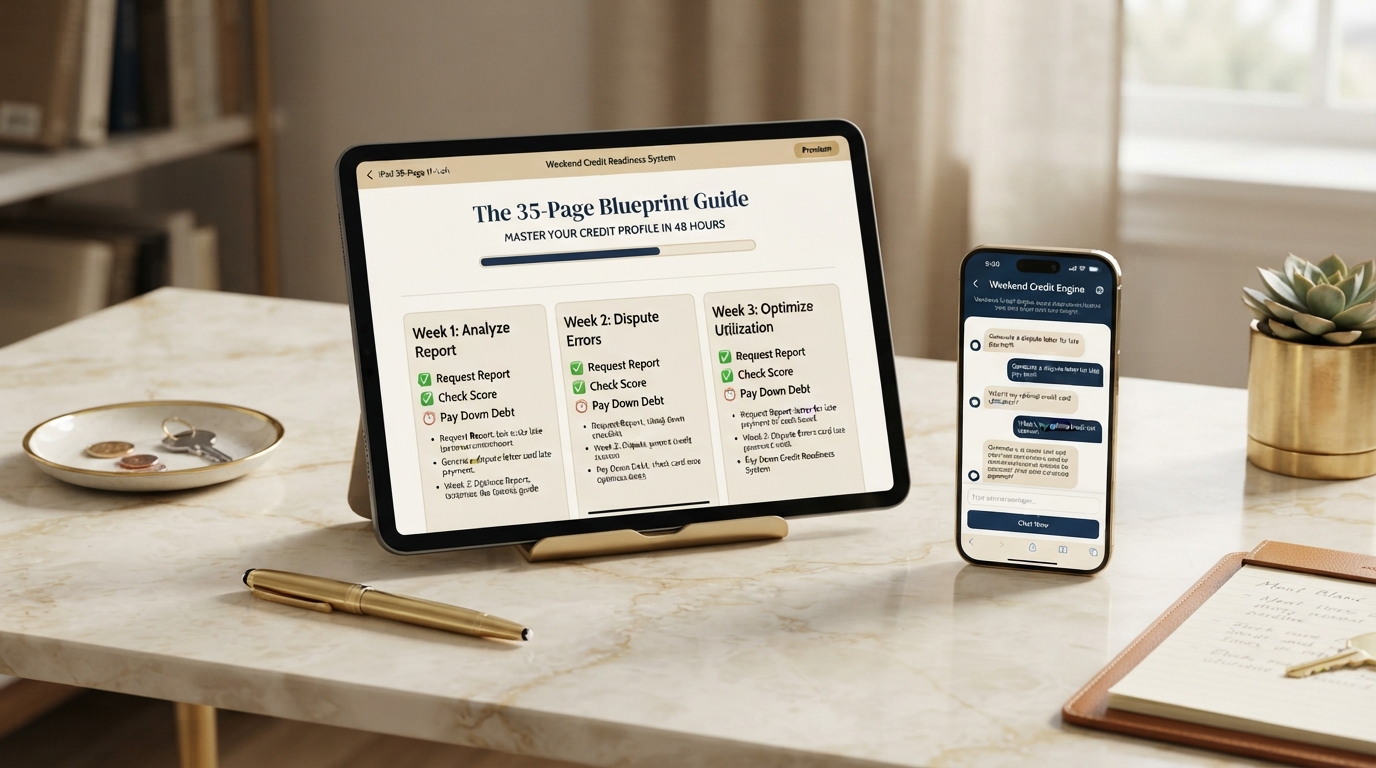
VEOL Asset 3: WebP · 1200×675 (16:9) · <100KB · File: weekend-credit-readiness-system-cta.webp · Pinterest: "Audit Your Late Payments This Weekend" · Board: Credit & FCRA Rights
Audit Your Late Payments This Weekend
The Weekend Credit Readiness System gives you a 35-page educational blueprint, 21 documentation frameworks, and pre-engineered AI prompt scripts to help you review possible reporting inaccuracies and organize factual next steps.
$17
One-Time Payment
🔒 Instant Digital Access • One-Time $17 • No Subscriptions
Frequently Asked Questions
Can a late payment be reported before 30 days past due?+
Under standard Metro 2 reporting guidelines, a payment generally must be at least 30 days past due before it is reported as late to the credit bureaus. A payment that is 15 or 29 days late may incur a creditor late fee, but it typically should not appear as a 30-day delinquency on your credit report. If it does, you may have a factual basis to dispute the reporting under FCRA § 1681e(b).
What does FCRA § 1681e(b) require of credit bureaus?+
Section 1681e(b) requires consumer reporting agencies to follow reasonable procedures to assure maximum possible accuracy of the information they report. When a bureau reports a late payment that does not meet the 30-day threshold — or contradicts the furnisher's own records — it may not be following those reasonable procedures, creating factual grounds for a dispute.
Do I have to pay someone to dispute an inaccurate late payment?+
No. The CFPB confirms that consumers can dispute credit-report inaccuracies themselves for free under the FCRA. You do not need to purchase any product or hire a company to exercise your dispute rights. Educational resources like The Weekend Credit Readiness System simply help you organize that process.
Can I guarantee a late payment will be removed from my report?+
No legitimate resource can guarantee removal. If the late payment is accurate and within the reporting window, it generally cannot be removed simply because it is unfavorable. If it is inaccurate, incomplete, or contradicts your payment records, you may have a factual basis to dispute it under the FCRA.
What is the Metro 2 reporting standard for late payments?+
Metro 2 is the credit reporting industry's standard format for furnishing account data. It requires furnishers to report the Account Status and Payment Rating fields accurately. A payment that is less than 30 days past due should not be reported with a 30-day delinquency code. Violations of this standard can create factual grounds for an accuracy dispute.
Editorial & Consumer Disclosure
This article is provided for general educational purposes and does not constitute legal, financial, or credit advice. Everything AI, LLC is an educational research publisher — not a Credit Repair Organization, law firm, or financial institution.
Consumers can review and dispute information they believe is inaccurate or incomplete themselves without purchasing any product. The FTC confirms that consumers can perform credit-report dispute activities at little or no cost.
No credit-score increase, account deletion, loan approval, or removal of accurate and verifiable information is promised or guaranteed. Individual results vary based on personal credit profile, reporting accuracy, and implementation.
Related Articles

Section 609 vs 611: Which Dispute Strategy to Use?
A clear breakdown of the difference between requesting validation under 609 and disputing accuracy under 611.
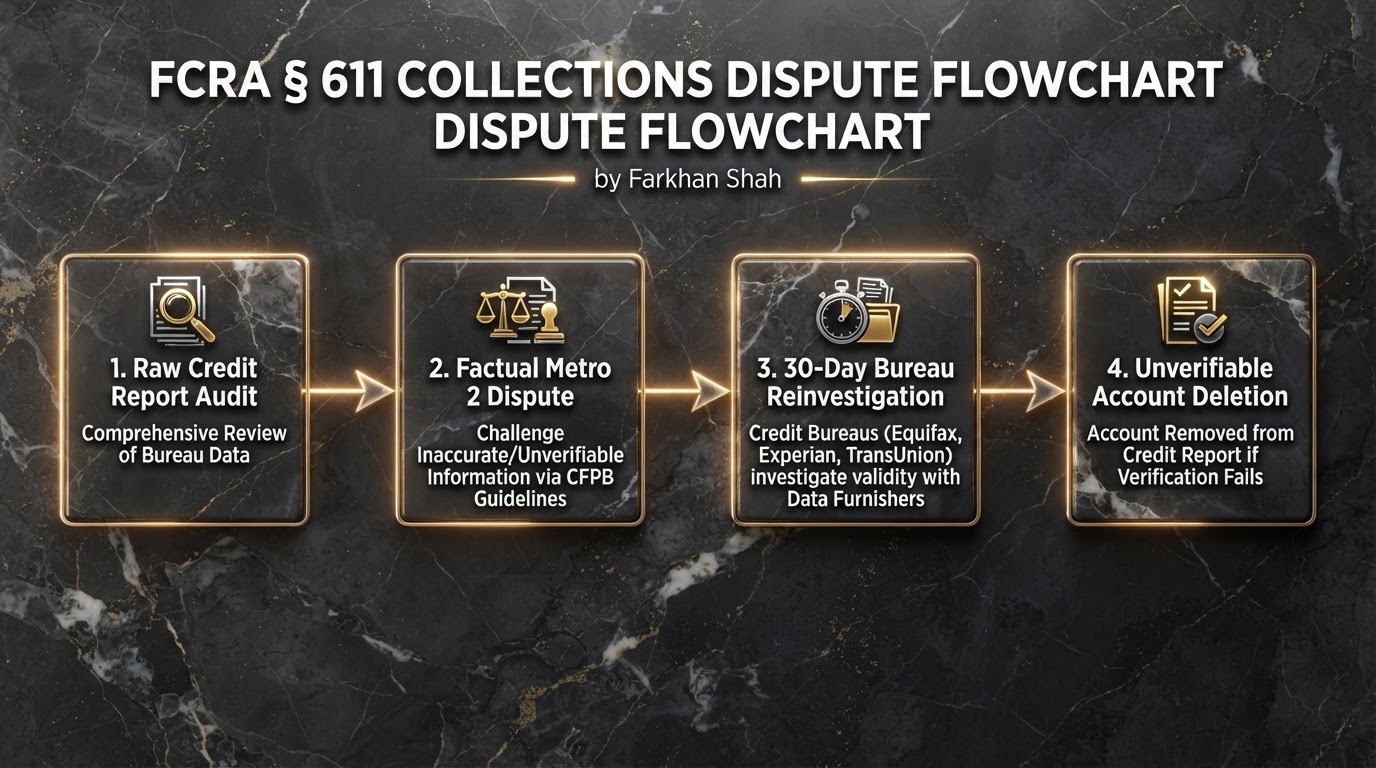
How to Remove Inaccurate Collections Using FCRA Section 611
Learn the exact legal framework to force credit bureaus to verify or delete inaccurate collection accounts from your credit report.

The Charge-Off Trap: Why an Internal Accounting Entry Is NOT a Free Pass
A charge-off is an internal accounting entry — not a free pass to ruin your credit. Learn 7 charge-off reporting traps and how to factually challenge them under FCRA § 1681s-2 and Metro 2 rules.