
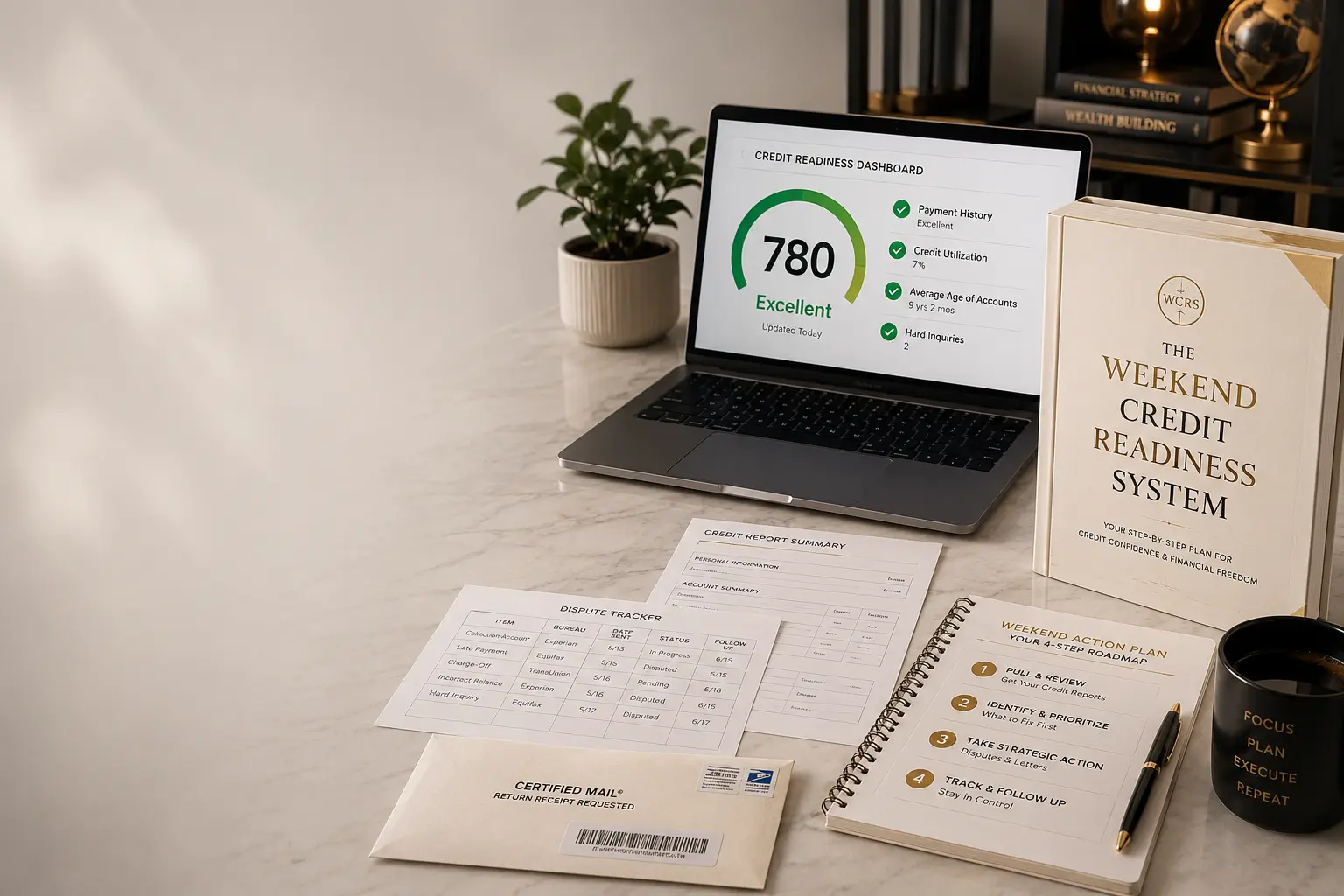

If you have ever purchased a "secret dispute letter template" online or written "I demand you validate this account because it is not mine," you have almost certainly received a response from Equifax, Experian, or TransUnion stating your request was deemed "frivolous or irrelevant." To exercise your FCRA rights effectively, you must stop arguing about whether the debt is yours and start learning how to identify reporting inaccuracies in the electronic data format used by credit bureaus.
1. The "e-OSCAR Wall": Why Generic Dispute Letters May Be Dismissed
When a consumer mails a dispute letter to Equifax, Experian, or TransUnion, they often envision a human investigator carefully reading their written statements, inspecting attached documents, and placing a call to the bank to verify facts. This human element is largely a myth in initial credit disputes.
In reality, consumer dispute mail is intercepted by high-speed mailroom scanners equipped with Optical Character Recognition (OCR) software. These OCR engines scan the physical text for recognizable keywords and reduce your multi-page legal argument into a simple 2-digit or 3-digit Automated Dispute Verification (ADV) code.
The e-OSCAR Automated Processing Pathway
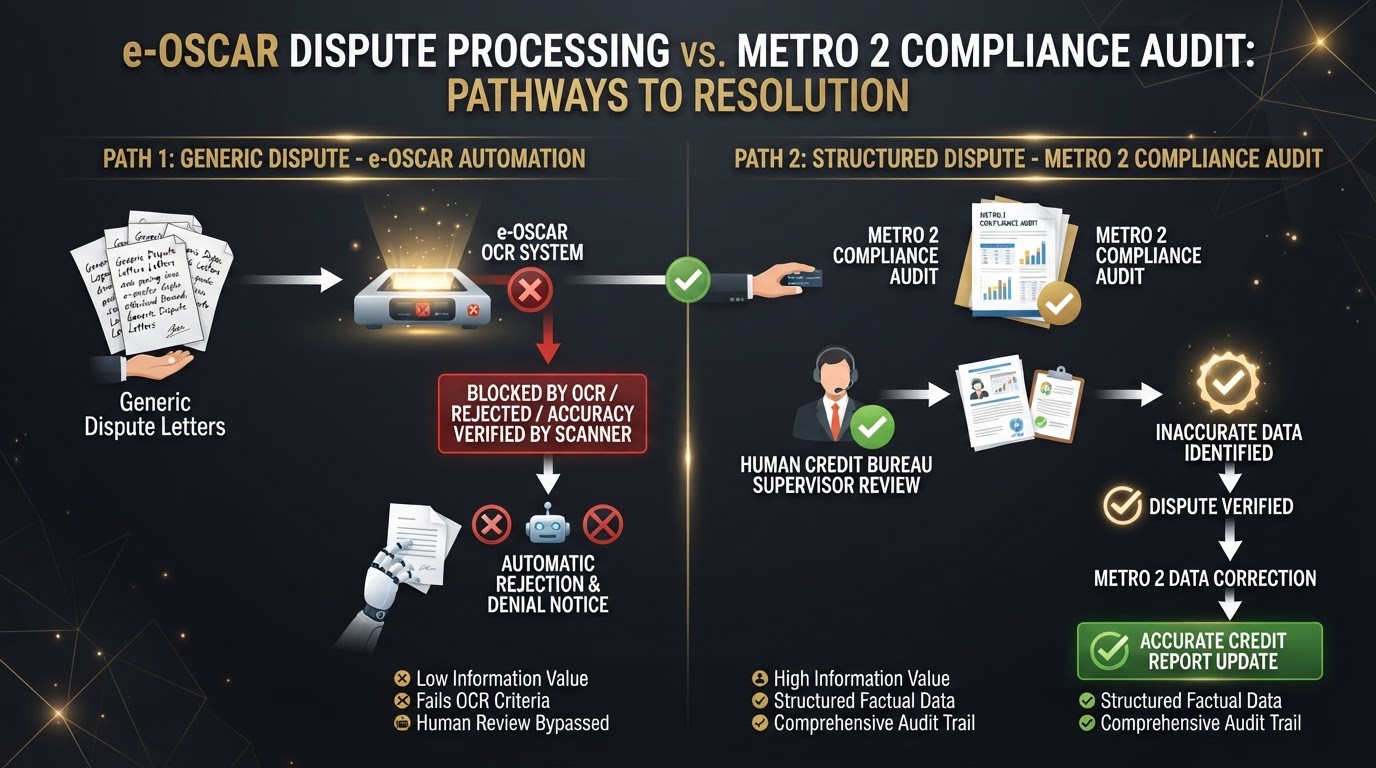
Figure 1: How automated e-OSCAR systems filter generic template letters versus factual Metro 2 data disputes.
These ADV codes are fed into e-OSCAR (Online Solution for Complete and Accurate Reporting), the web-based portal shared by credit reporting agencies (CRAs) and data furnishers (banks, collection agencies, debt buyers).
When you use generic internet templates—containing phrasing like "I request validation under the FDCPA," "This account is not mine," or "Prove I signed a contract"—the OCR system recognizes the standardized template structure instantly. Because these letters present zero specific data contradictions, e-OSCAR flags them under Frivolous Dispute Rejection Codes pursuant to FCRA Section 612 (15 U.S.C. § 1681i(a)(3)). Under this statute, credit bureaus are legally permitted to terminate an investigation without contacting the furnisher if they determine the dispute is frivolous, repetitive, or lacks specific factual evidence.
To navigate the e-OSCAR system effectively, your dispute must cite explicit, non-conforming electronic data fields within the standardized computer language used by credit bureaus: The Metro 2 Format.
2. What is Metro 2? The Anatomy of Credit Reporting Data
The Metro 2 Format is the universal, standardized electronic data specification developed by the Consumer Data Industry Association (CDIA). Every bank, mortgage lender, auto financier, credit card issuer, and collection agency must translate their account records into Metro 2 layout tapes before transmitting them to Equifax, Experian, TransUnion, and Innovis.
When a creditor updates your tradeline each month, they do not send a written statement. They send a rigid 422-character string of alphanumeric codes containing precise data segments.
Breakdown of Metro 2 Physical Data Segments
Contains administrative identification data, including the Furnisher's Program Identifier, Bureau ID, and the exact Cycle Date of the data tape transmission.
The core payload containing 422 fixed characters. Includes Consumer Name, Address, SSN, DOB, Account Number, Portfolio Type, Account Status, Payment Rating, Date Opened, High Credit, Current Balance, Date of First Delinquency (DOFD), and Compliance Condition Codes. Over 90% of legal compliance violations occur within these 422 characters.
Appended when secondary entities exist on the tradeline (e.g., co-signers, joint applicants, or authorized users). Errors here frequently create "mixed file" liabilities.
Used for specialized disclosures. For instance, Segment K1 is required for collection agencies to report the original creditor name, while K2 reports mortgage balloon payment parameters.
Metro 2® Data Field Discrepancy Calculator
Input numbers & codes from your Equifax, Experian, and TransUnion reports to instantly calculate cross-bureau violations and FCRA statutory breaches.
Real-Time Compliance Audit Results
Engine has auto-flagged 6 statutory violations across your inputs.
Internal Logical Contradiction: Charge-Off with Current Payment Rating
Equifax reports Account Status 97 (Charged-Off) while Field 17A reports Code 11 (Current). An account cannot legally or logically be written off as a loss while maintaining a current status.
Cross-Tape Status Mismatch Across Bureaus
The same data furnisher tape transmits conflicting Account Statuses: Equifax Code 97, Experian Code 11, TransUnion Code 97. Identical data tapes cannot yield contradictory account statuses without data corruption.
Inconsistent High Credit / Original Loan Amount
High Credit varies across bureau reports ($5,000 EQ vs $6,200 EX vs $5,000 TU). Historical credit limits do not fluctuate between reporting agencies.
Conflicting Current Balance Data Across Bureaus
Current Balance reported as $4,850 on EQ, $4,850 on EX, and $0 on TU. Over-reporting balance artificially inflates Debt-to-Income (DTI).
Date of First Delinquency (DOFD) Re-Aging / Mismatch
DOFD reported as 04/2021 on EQ, 10/2022 on EX, and 04/2021 on TU. DOFD governs the 7-year statutory removal clock under FCRA § 605. Altering or re-aging DOFD violates federal law.
Improper Scheduled Monthly Payment on Collection Portfolio (DTI Inflation)
Portfolio Type O (Open Collection) carries no contractual installment agreement. Reporting a scheduled monthly payment ($150/mo) artificially penalizes Debt-to-Income ratios for mortgage and loan underwriting.
Metro 2® Data Field Validator & Audit Engine
Select a real-world scenario or test your own tradeline data to detect e-OSCAR rejection vulnerabilities and FCRA compliance breaches.
Tradeline Data Field Parameters (Base Segment)
FCRA § 607(b) ComplianceAudit Results & Statutory Violations (2)
The tradeline is flagged as a Charged-Off Loss (Status 97) while simultaneously reporting a Payment Rating of Current (Code 11/00). An account cannot be a profit-and-loss write-off while being current.
The consumer has previously disputed this account, but the furnisher failed to transmit Code XB (Account Disputed by Consumer) or Code XC in Field 25A during monthly data uploads.
[VIOLATION #1: Account Status 97 vs Payment Rating 11 Contradiction]
- Metro 2 Fields: Field 17 (Account Status) & Field 17A (Payment Rating)
- Statutory Violation: FCRA § 607(b) [15 U.S.C. § 1681e(b)] & Metro 2 CDIA Standard
- Legal Audit Citation:
"In accordance with Metro 2 reporting standards and FCRA § 607(b), Field 17 (Account Status: 97) directly contradicts Field 17A (Payment Rating: 11). An account cannot be written off as a loss while simultaneously reporting as current. This structural data conflict proves the furnisher is transmitting unverifiable data. Demand immediate correction or deletion."

[VIOLATION #2: Missing Compliance Condition Code (FCRA § 623 Violation)]
- Metro 2 Fields: Base Segment Field 25A (Compliance Condition Code)
- Statutory Violation: FCRA § 623(a)(3) [15 U.S.C. § 1681s-2(a)(3)]
- Legal Audit Citation:
"Pursuant to FCRA § 623(a)(3), when a consumer disputes the accuracy of any information, the furnisher is legally mandated to append a notice of dispute to all subsequent data transmissions. Field 25A (Compliance Condition Code) lacks Metro 2 Code XB/XC. Transmitting derogatory credit data without noting an active dispute constitutes a willful violation of federal law."
Metro 2® Dispute Progress Tracker DashboardInteractive Saved
Track your Metro 2 factual disputes across Equifax, Experian, and TransUnion. Monitor 30-day statutory clocks, update status stages, and generate evidence summaries.
Midland Credit Management
#4829-XXXXMetro 2 Audit: Base Segment Field 17 (Account Status 11 vs Payment Rating 93 contradiction)
9407 1118 9956 0123 4567 89Note: Factual dispute mailed via Certified Mail. Received signed green card.
Portfolio Recovery Associates
#8812-XXXXMetro 2 Audit: DOFD Re-aging (FCRA § 623(a)(5) Date of First Delinquency shift)
9407 1118 9956 0987 6543 21Note: 30-day window expired without response. Sent 15-day MOV Demand under FCRA § 609.
LVNV Funding LLC
#3301-XXXXMetro 2 Audit: Missing Compliance Condition Code (FCRA § 623(a)(3) active dispute flag missing)
9407 1118 9956 5555 4444 33Note: Bureau confirmed tradeline removed from TransUnion credit file on day 38!
Metro 2® Factual Dispute Audit Checklist
Official statutory compliance audit sheet. Use before submitting written disputes via USPS Certified Mail.
Check for Code 97 (Charged-off) reported with Code 11 or 00 (Current). Structural contradiction.
Verify DOFD is present and not re-aged to a recent date by collection agency.
Verify XB or XC code is reported if account was previously disputed with furnisher.
Collection accounts must report $0 payment. Monthly amounts artificially inflate DTI.
Compare High Credit across Equifax, Experian, TransUnion for data tape mismatches.
Ensure collection is not misclassified as Revolving (R) or Installment (I). Should be Open (O).
Log Certified Mail tracking # and establish Day 1 delivery date for 30-day statutory clock.
Include clear copy of Driver License and recent Utility Bill to prevent identity stall letters.
Prepared via Everything AI, LLC Metro 2® Compliance Educational Portal. Maintain in dispute permanent evidence binder.
Metro 2® Factual Dispute Builder
See how Metro 2 compliance logic structures a bulletproof factual dispute letter in under 60 seconds.
Tired of analyzing raw credit data by hand?
To get pre-written dispute templates and educational reference letters, download the $17 DIY Credit Repair System Blueprint
3. Deep-Dive: The 7 Lethal Metro 2 Data Field Errors
When conducting a technical credit audit, your goal is to discover internal field logical contradictions or statutory non-compliance across the 422-character Base Segment. Below are 7 lethal Metro 2 reporting errors that create immediate legal leverage under FCRA § 611 and § 623.
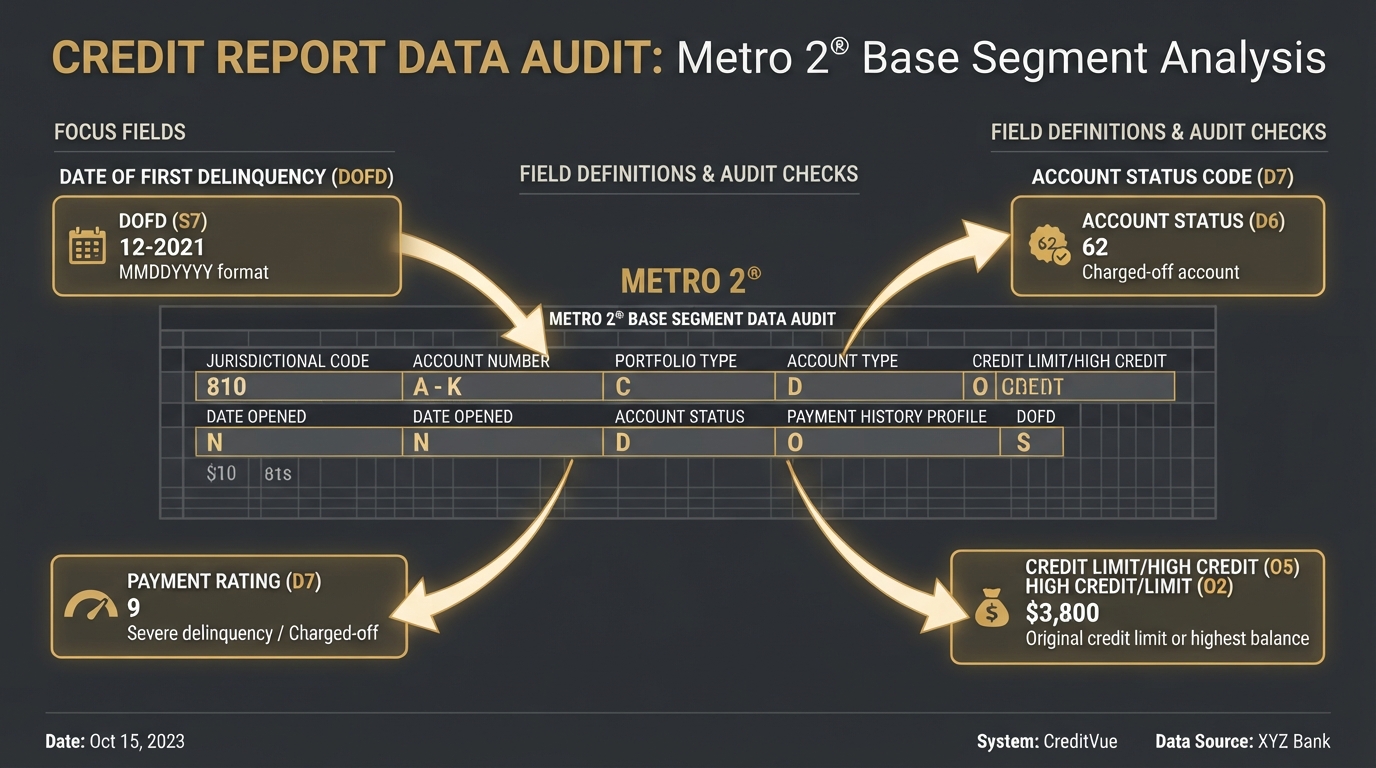
Figure 2: The core Metro 2 Base Segment fields audited during a factual FCRA Section 611 investigation.
Field 17 (Account Status) vs. Field 17A (Payment Rating) Contradictions
The Technical Rule: Base Segment Field 17 defines the current status of the account (e.g., Code 11 = Current, Code 71 = 30 Days Late, Code 97 = Unpaid Balance Reported as a Loss/Charge-Off). Field 17A defines the Payment Rating during that specific reporting cycle.
The Observation: Furnishers frequently report an Account Status of Code 97 (Charged-Off) while simultaneously entering a Payment Rating of Code 11 (Current) or Code 00 (Current / As Agreed). An account cannot logically be charged-off as a total loss while simultaneously maintaining a current payment status. This structural contradiction may indicate non-compliance with the FCRA § 607(b) requirement for maximum possible accuracy and can be cited in a reinvestigation request.
Date of First Delinquency (DOFD) vs. Date Last Active (DLA) Re-Aging Traps
The Technical Rule: Base Segment Field 25 contains the Date of First Delinquency (DOFD)—the exact month and year the account reached a delinquency from which it was never brought current. Under FCRA § 605 (15 U.S.C. § 1681c), the DOFD strictly governs the 7-year statutory obsolescence clock.
The Observation: Collection agencies and debt buyers frequently attempt to "re-age" debt by leaving Field 25 blank or updating the Date Last Active (Field 22) or Date Opened (Field 10) to a recent date when purchasing the portfolio. If a collection agency reports a debt with a recent DLA or a missing DOFD, it may represent a compliance concern that could unlawfully reset the 7-year clock — and can be cited in a reinvestigation request.
Missing Compliance Condition Codes (CCC) During Active Disputes (FCRA § 623(a)(3))
The Technical Rule: Under 15 U.S.C. § 1681s-2(a)(3), if a consumer disputes the accuracy of any reported information directly with a furnisher or bureau, the furnisher is legally obligated to append a Compliance Condition Code (Base Segment Field 18) to all subsequent Metro 2 data submissions.
The Observation: Valid Metro 2 dispute condition codes include Code XB (Account disputed by consumer under FCRA) and Code XC (Completed investigation - Consumer disagrees). If you have previously submitted a written dispute and the furnisher continues to update the tradeline without Field 18 displaying Code XB or XC, this may represent a potential reporting inconsistency that can be cited in a reinvestigation request.
Terms Duration & Scheduled Monthly Payment Discrepancies on Sold Debt
The Technical Rule: Base Segment Field 13 (Terms Duration) and Field 14 (Scheduled Monthly Payment) report contractual installment terms (e.g., a 60-month auto loan with a $350/month obligation).
The Observation: Third-party collection agencies purchasing defaulted debt do not hold an installment contract with the consumer. Therefore, Field 13 should report Code 001 (Single Payment) and Field 14 should report $0. When collection agencies erroneously enter $150/month in Scheduled Monthly Payment, they may artificially inflate the consumer's Debt-to-Income (DTI) ratio and potentially breach Metro 2 formatting guidelines — this can be cited in a reinvestigation request.
Original Credit / High Credit Amount Mismatches Across Bureau Tapes
The Technical Rule: Base Segment Field 21 (High Credit / Original Loan Amount) must reflect the highest historical balance or original principal.
The Observation: Because furnishers send identical data tapes to all three bureaus, Field 21 should match across Equifax, Experian, and TransUnion. If Equifax reports $5,000 High Credit while Experian reports $5,800 for the exact same tradeline, at least one reporting agency may be publishing inaccurate data, providing grounds for a statutory reinvestigation request.
Portfolio Type Misclassifications (Revolving vs. Collection vs. Installment)
The Technical Rule: Base Segment Field 9 designates the Portfolio Type: C (Line of Credit), I (Installment), M (Mortgage), R (Revolving), or O (Open Account).
The Observation: Debt buyers routinely misclassify collection accounts as "Revolving" or "Installment" trade lines. A collection account is an Open Collection (Portfolio Type O) and possesses no revolving line or installment schedule. Misclassifying collections as revolving accounts may negatively impact credit scoring algorithms (FICO 8/9) and can be cited in a reinvestigation request.
Bureau-to-Bureau Cross-Tape Data Inconsistencies
The Technical Rule: Under FCRA § 607(b), credit bureaus must maintain reasonable procedures to assure maximum possible accuracy of reported information.
The Observation: When a consumer compares official statutory reports side-by-side and finds that TransUnion reports an account as "Open" with a $1,200 balance, while Equifax reports the same account as "Closed" with a $0 balance, the furnisher's Metro 2 reporting tape may be self-contradictory. Citing these cross-bureau discrepancies in your reinvestigation request provides specific factual evidence for the bureau to review.
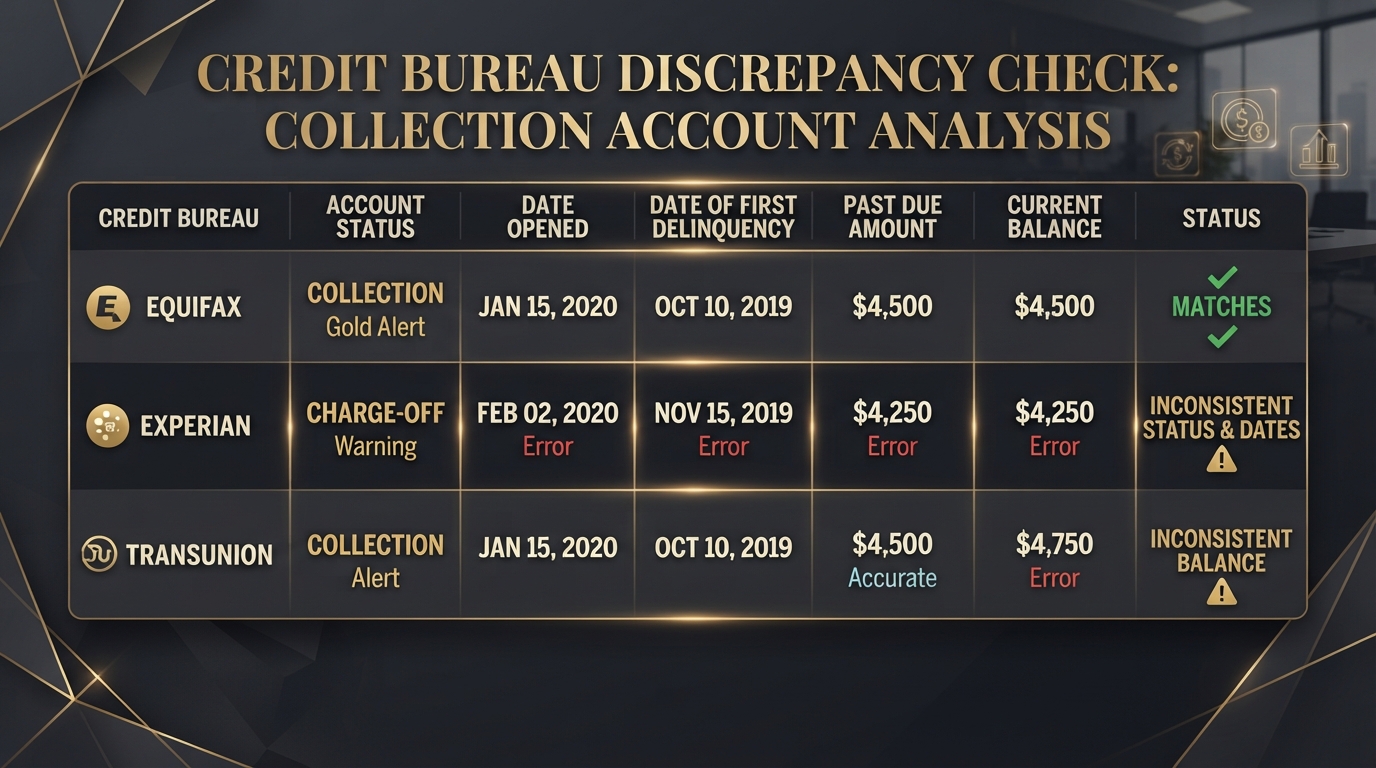
Figure 3: Common cross-bureau reporting errors that violate Metro 2 compliance standards.
Get The Complete Weekend Credit Readiness System
Everything you need to review your credit report, understand Metro 2 compliance standards, and draft educational dispute letters.
- 21+ Metro 2 & FCRA Educational Dispute Templates (Charge-Offs, Collections, Compliance Codes, & Inquiries)
- Master AI Prompt Library (Plug your account facts into AI to draft custom dispute letters in seconds)
- Step-by-Step 30-Day Response & Paper-Trail Roadmap (Enforce 30-to-45 day FCRA investigation deadlines)
- 35-Page Complete Credit Audit & Readiness Guide (Comprehensive breakdown of Metro 2 data fields)
Instant Digital Download (PDF Format) • Lifetime Access • Includes All 21+ Templates & AI Prompts
4. Step-by-Step Execution Guide: Drafting a Metro 2 Compliance Dispute
Now that you have identified specific data mismatches, you must structure your physical dispute letter to request manual human review and reduce the likelihood of e-OSCAR automated categorization.
Step 1: Obtain Official Statutory Paper Reports
Do not perform a Metro 2 audit using third-party credit monitoring apps (e.g., Credit Karma, FreeCreditScore). These portals display formatted, consumer-friendly summaries that strip away underlying Metro 2 field codes. Obtain raw statutory reports directly from AnnualCreditReport.com or via paper request.
Step 2: Line-by-Line Cross-Bureau Field Audit
Place Equifax, Experian, and TransUnion reports side-by-side. Highlight the specific target account and audit the 7 lethal fields detailed above. Document every numerical discrepancy, missing DOFD, or invalid payment rating.
Step 3: Construct Factual, Legal-Grade Letter Language
Avoid emotional narratives ("I was sick that month," "This debt isn't mine"). Speak strictly in terms of technical non-compliance and FCRA mandates.
EDUCATIONAL REFERENCE TEMPLATE — REINVESTIGATION REQUEST UNDER FCRA § 611 (15 U.S.C. § 1681i)
The following is a sample educational template. Adapt the language to reflect your specific findings.
TO: Equifax Information Services LLC / Special Disputes Department
RE: Request for Reinvestigation of Metro 2 Data Field Inconsistency on Tradeline [ Furnisher Name / Account # 12345XXXX ]
Dear Special Dispute Supervisor,
I am conducting a review of my statutory credit file and have identified an electronic reporting inconsistency that may not comply with the FCRA § 607(b) requirement for maximum possible accuracy.
SPECIFIC METRO 2 FIELD OBSERVATIONS:
1. Account Status vs. Payment Rating Conflict: This tradeline reports Base Segment Field 17 (Account Status) as Code 97 (Charge-Off), while simultaneously reporting Field 17A (Payment Rating) as Code 11 (Current). An account cannot logically be charged off as a loss while maintaining a current status.
2. Scheduled Monthly Payment Observation: As a third-party collection agency, the furnisher holds no installment contract with me. Reporting $125/month in Field 14 (Scheduled Payment Amount) may not align with Metro 2 Base Segment guidelines for Portfolio Type O.
Pursuant to 15 U.S.C. § 1681i(a)(1), I am requesting that you conduct a reasonable reinvestigation into these specific technical fields. If the furnisher cannot verify these specific field parameters within 30 days, I understand that 15 U.S.C. § 1681i(a)(5)(A) requires the deletion of unverifiable information.
Step 4: Dispatch via USPS Certified Mail with Return Receipt
Never submit disputes via bureau online portals. Online dispute tools force you to select preset dropdown choices, automatically converting your claim into e-OSCAR automated ADV codes and waiving your right to submit custom physical evidence. Always mail physical letters via USPS Certified Mail with Return Receipt Requested.
5. How to Request CRA Supervisor Review
If a credit bureau issues an automated response or claims the item was "verified" without correcting the Metro 2 error, you may execute this 3-step escalation protocol to exercise your FCRA rights:
Issue a Method of Verification (MOV) Demand (15 U.S.C. § 1681i(a)(7))
Demand that the bureau provide, within 15 days, the name, business address, and telephone number of the specific individual contacted at the furnishing company, along with the exact verification documents inspected.
File a Certified CFPB Regulatory Complaint
Submit a formal complaint with the Consumer Financial Protection Bureau at consumerfinance.gov. Attach your original Metro 2 audit letter, your USPS Certified Mail green card proof, and the bureau's response. Citing FCRA § 611 and § 607(b) observations in a CFPB complaint may prompt the bureau's executive legal team to review the file.
Issue a Notice of Intent to Sue (NOITS)
If the bureau remains non-compliant, send a formal Notice of Intent to Sue detailing statutory damages under 15 U.S.C. § 1681n (Willful Non-Compliance) providing a 14-day cure period prior to federal litigation.
6. Why Manual Auditing Takes Hours (And How to Automate It)
Manually auditing 35 pages of raw credit reports across Equifax, Experian, and TransUnion—cross-referencing 422-character data segments for multiple accounts—is painstaking work. A single overlooked Date of First Delinquency or Compliance Condition Code can cost you months of progress.
This is why we built The Weekend Credit Readiness System. It provides pre-formatted Metro 2 audit spreadsheets, field-checking reference guides, and educational dispute letter templates designed to help you verify data format compliance and submit well-structured reinvestigation requests under the FCRA.
Compliance FAQ & Legal Lookup Engine
Instant real-time search across FCRA statutes, Metro 2 fields, e-OSCAR rules, and regulatory escalation guidelines.
e-OSCAR uses Optical Character Recognition (OCR) scanners to parse dispute letters into 2-digit Automated Dispute Verification (ADV/ACDV) codes. Generic internet templates containing phrases like 'Validate this debt' or 'Not mine' trigger e-OSCAR Frivolous Dispute Rejection Codes under FCRA § 612 (15 U.S.C. § 1681i(a)(3)), allowing credit bureaus to dismiss the dispute without contacting the bank.
Take Control of Your Credit File Today
Don't let non-compliant collection reporting dictate your financial future. Visit creditrepair.everythingainow.com to access educational dispute assets developed by Everything AI LLC.
Legal Disclosures & Operational Compliance
Educational Content Notice: The articles, software tools, digital templates, and blueprints provided on creditrepair.everythingainow.com are published by Everything AI LLC strictly for educational, informational, and self-help purposes. Everything AI LLC, Farkhan Shah, and its affiliates are not a law firm, credit repair organization (CRO) as defined under local or federal statutes, or financial advisory firm, and do not provide formal legal representation, credit repair services, or certified financial planning.
No Guarantee of Results: Individual consumer credit profiles, history, and statutory responses vary. Federal laws such as the Fair Credit Reporting Act (FCRA) (15 U.S.C. § 1681 et seq.) grant consumers the right to dispute inaccurate, incomplete, or unverifiable data directly with Consumer Reporting Agencies (Equifax, Experian, TransUnion). However, no software, template, or guide can guarantee the removal of 100% accurate, timely, and fully verifiable negative tradelines or bankruptcy records prior to their statutory expiration dates.
Credit Repair Organizations Act (CROA) & FTC Compliance: In compliance with FTC regulations and federal consumer protection statutes, we do not charge upfront fees for credit repair performance services, nor do we act as an intermediary to alter your credit file on your behalf. All tools and templates provided are designed to empower you to execute your own lawful, factual disputes directly.
Trademark & Regulatory Attribution: Equifax, Experian, TransUnion, e-OSCAR, CFPB, and FTC are registered trademarks of their respective corporate entities. Everything AI LLC is an independent software and educational publisher and is not officially affiliated with, endorsed by, or sponsored by these agencies. Copyright © 2026 Everything AI LLC. All rights reserved.